The problem
Immunefi's core service pages weren't converting. The platform connected security researchers with Web3 projects to find and fix vulnerabilities before attackers did — but the product was translating that into dense, technical information that created friction instead of confidence. In a Web3 landscape crowded with copycats, the interface also wasn't doing anything to set the company apart.
My job was to make sophisticated security intelligence feel effortless — without dumbing down the substance that made security researchers and project teams trust the platform in the first place.
What I owned
I joined as employee #12 with no design function yet in place. I became the main product designer and, over the time I was there, personally designed the majority of the platform — working directly with the founding team and engineering rather than handing off to a larger design org. That meant owning research, product decisions, visual design, and a fair amount of the content strategy myself.
How I approached it
I started with the data — looking at where users were actually dropping off across the core flows — and ran strategic workshops with the team to find the highest-impact places to focus first, rather than trying to redesign everything at once.
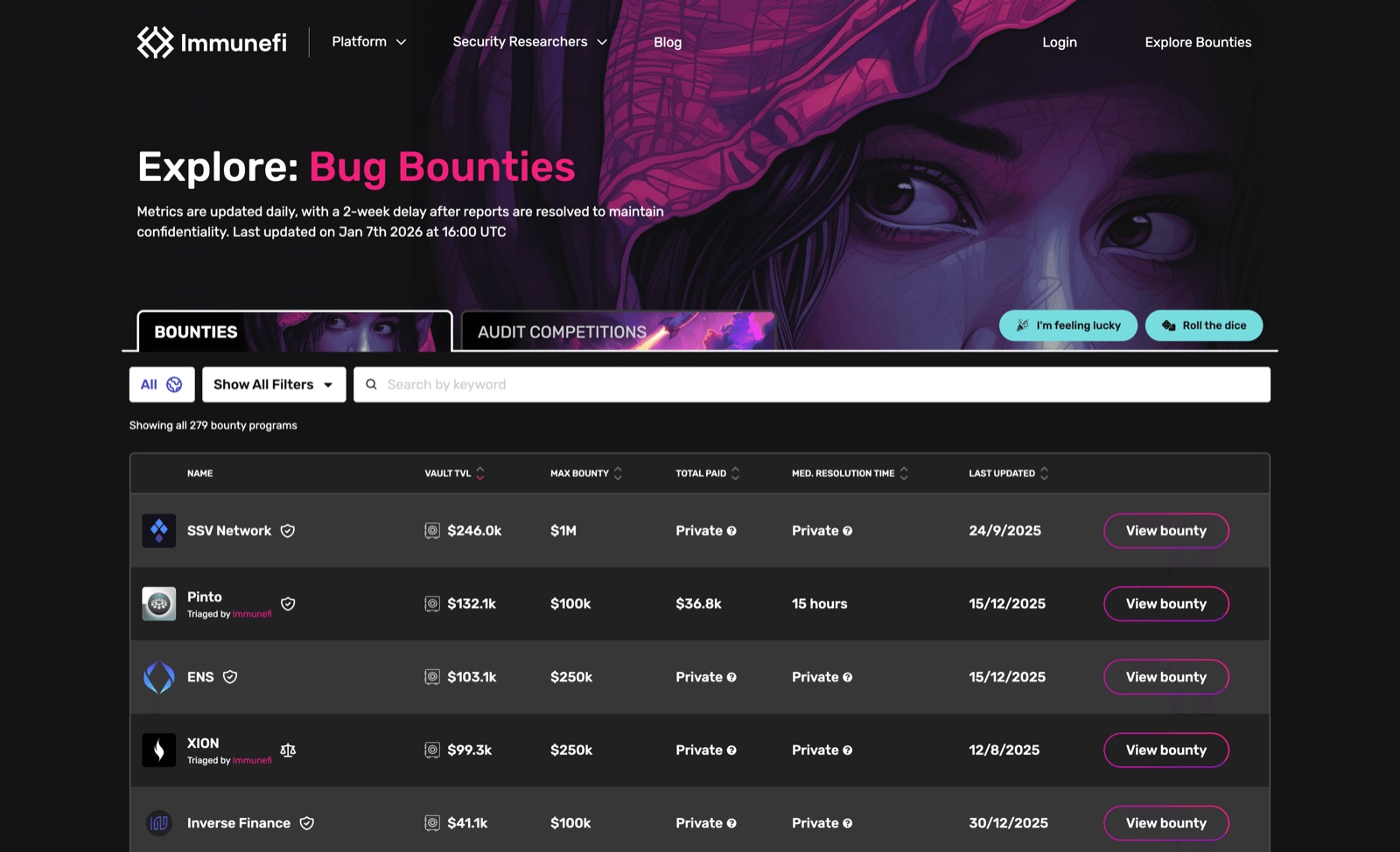
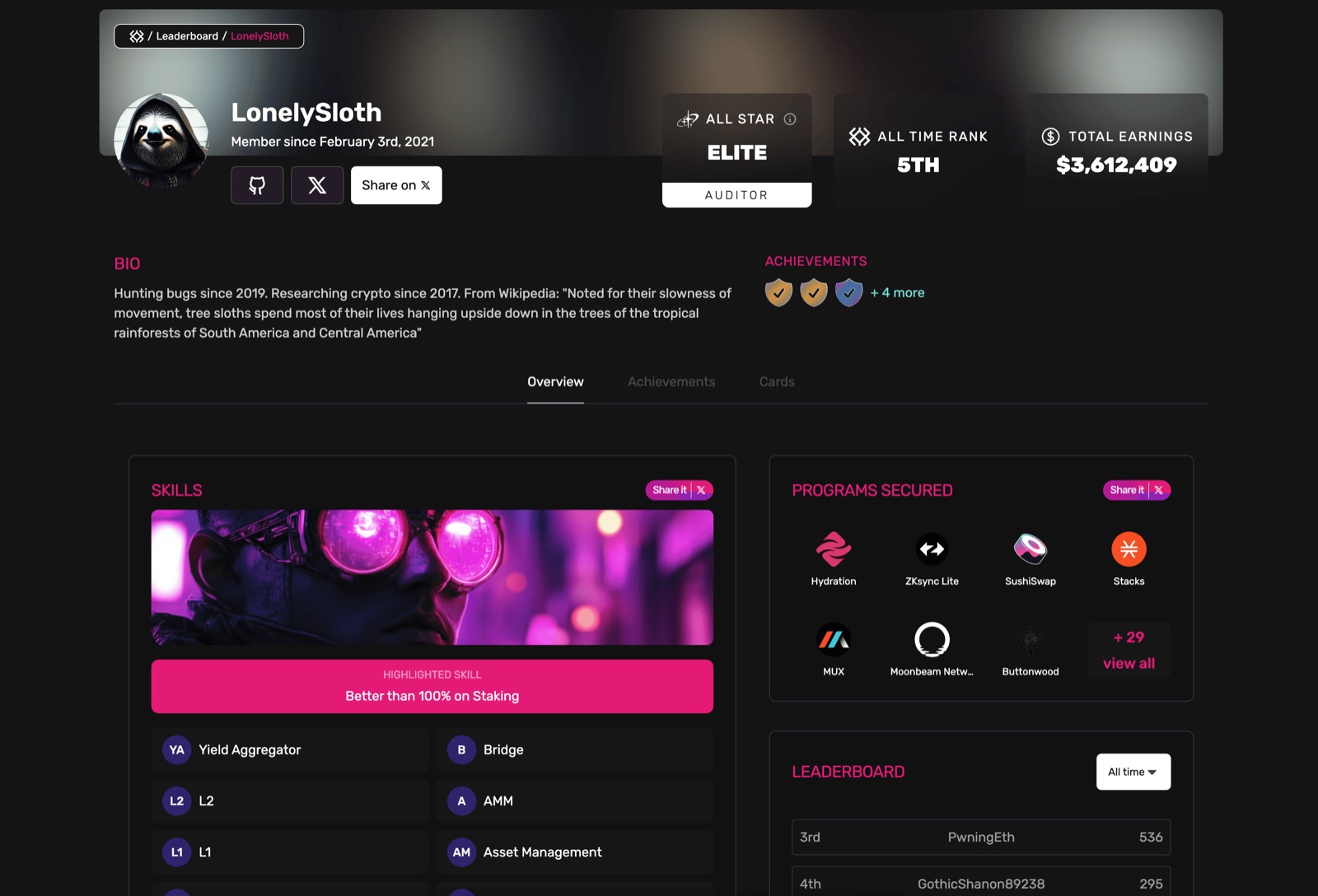
From there I treated brand and product as one problem, not two. I developed a visual language — a bolder color system and more confident typography — that gave the product a distinct identity in a crowded market, while restructuring dense security data into formats people could actually scan and act on. The two biggest rebuilds were the Explore page, where projects and vulnerability programs live, and the Profile page, where I introduced lightweight gamification to make researcher reputation and progress visible.
Outcome
By the time I left to start something of my own, the platform had gone on to protect over $180B in Web3 funds across 650+ clients — scale that built on this work, even though I can't claim that growth as solely my own doing.
Looking back
The hardest part was never the pixels — it was building enough trust into an interface that people would stake real money on it.
Immunefi is still the clearest proof I have that I can take a product from nothing to something people trust with real stakes — and it's the standard I hold my own work to now.